Fall Planting Guide for Overwintering Garlic and Onions
Autumn is the season when the vegetable garden stops asking for attention and starts asking for decisions. The beds are empty, the light is thinning, and there is a small window — a few weeks, sometimes less — when the soil is still warm enough to work and cool enough to promise that nothing will sprout too soon. That window belongs to garlic and to overwintering onions. Plant them well now and they spend the winter quietly rooting, then surge in March while spring-planted alliums are still sulking in their packets. Plant them badly and you will spend April replanting. The difference comes down to four things: timing, depth, spacing, and mulch.
Why Fall Planting Works
Garlic and overwintering onions are cool-season crops with a long memory of winter. A garlic clove needs a stretch of cold before it divides into a proper head; plant the same clove in March and you will usually harvest a single round bulb, fat but useless for the kitchen's small jobs. Overwintering onions run on a different clock: they use the short days of late winter to build roots and leaves, then bulb as the days lengthen in June. Give them a head start in autumn and they finish weeks before spring-planted sets.
The mechanics are simple. Soil stays warm long after the air turns cold. A clove or a small onion set put into that soil in early autumn will grow roots for four to eight weeks, sit dormant through the worst of the weather, and resume almost the moment the ground thaws. Those roots are the whole point. A plant with an established root system shrugs off a dry April; one planted in March spends that month catching up.
Timing: Aim for Roots, Not Shoots
The most common mistake is planting too early, usually out of enthusiasm after the first cool week of September. Warm soil plus a month of mild weather produces soft top growth that a hard frost turns to mush, and the plant has spent its reserves on leaves it cannot keep. Planting late is less damaging but nearly as disappointing: the clove sits in cold ground, roots barely form, and winter heaves it back out.
For garlic, aim for three to six weeks before the ground freezes solid — roughly when soil at planting depth has dropped to around 10°C (50°F) and is still falling. In a cold continental climate that means late September to late October; in milder coastal or Mediterranean climates, October into November. You want roots and, at most, one or two short leaves before the cold stops everything.
Overwintering onions go in two to four weeks ahead of the garlic. They need a little more time to size up, and their tops tolerate cold better than garlic's. In very cold areas, where the ground freezes deep and stays frozen, treat autumn onions as a gamble and keep a tray of spring sets as backup. Hardy Japanese and northern European types stand a far better chance than ordinary storage onions.
The goal is a plant that has rooted but not rushed: small, stocky, slightly bored-looking going into winter.
Preparing the Bed
Drainage decides whether you harvest bulbs or find brown mush in February. Alliums hate sitting in water, and winter is when beds sit wettest. If your soil is heavy clay, plant on a raised bed or a ridge, or at least on the higher, sandier end of the garden.
Prepare the ground a couple of weeks ahead: fork it over without inverting the layers, work in five to eight centimetres of well-rotted compost, and firm it gently. Skip fresh manure — too rich and too wet for alliums in autumn. A pH near neutral, roughly 6 to 6.5, suits both crops; on acid ground, a light dusting of lime in early autumn helps. Keep the bed clear of last season's alliums, too. A three-year rotation away from garlic, onions, leeks and shallots is a sensible habit.
Planting Garlic: Depth, Spacing, and the Pointed End Up
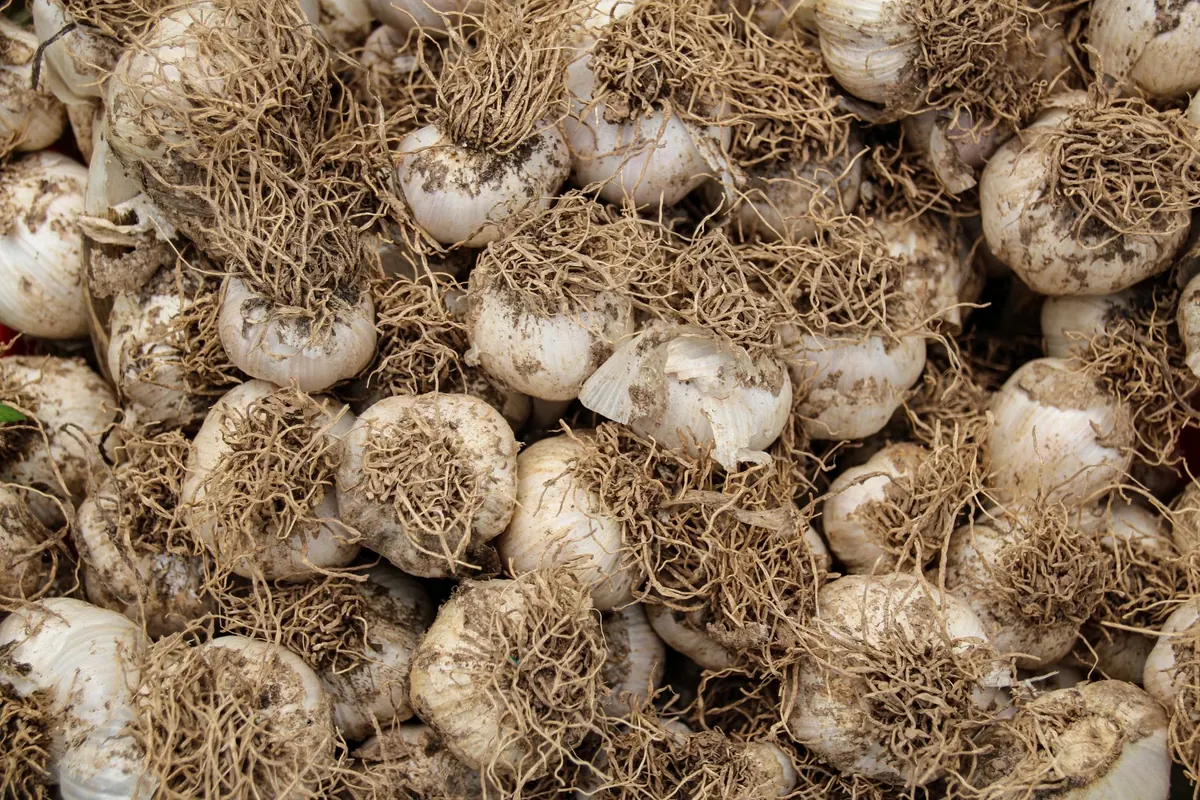
Buy seed garlic from a grower rather than using supermarket bulbs, which are often treated to slow sprouting and may carry soil-borne disease. Hardneck varieties are the reliable choice where winters bite; softnecks do better in mild, wet climates. Break the head into cloves the day you plant — not before — and keep the papery skins intact. Small cloves are fine for green garlic in spring; the biggest cloves make the biggest heads.
- Open a furrow about 5 cm (2 in) deep and set cloves with the flat base down and the pointed tip up. A clove planted sideways will still grow, but it wastes energy finding its way.
- In cold climates, plant deeper: 7 to 8 cm (3 in) of soil over the tip protects against frost heave. In mild, rainy climates, shallower is safer — 2 to 3 cm (1 in) above the tip reduces rot.
- Space cloves 15 cm (6 in) apart in rows 25 to 30 cm (10–12 in) apart, or 10 cm apart in a dense bed where you will pull some as green garlic.
- Water once to settle the soil, then leave the bed alone. Autumn rain usually does the rest.
- Label the varieties. In March every row looks identical, and it helps to know which one bolted and which one shrugged off the frost.
Overwintering Onions: Sets, Transplants, and the Temptation to Plant Deep
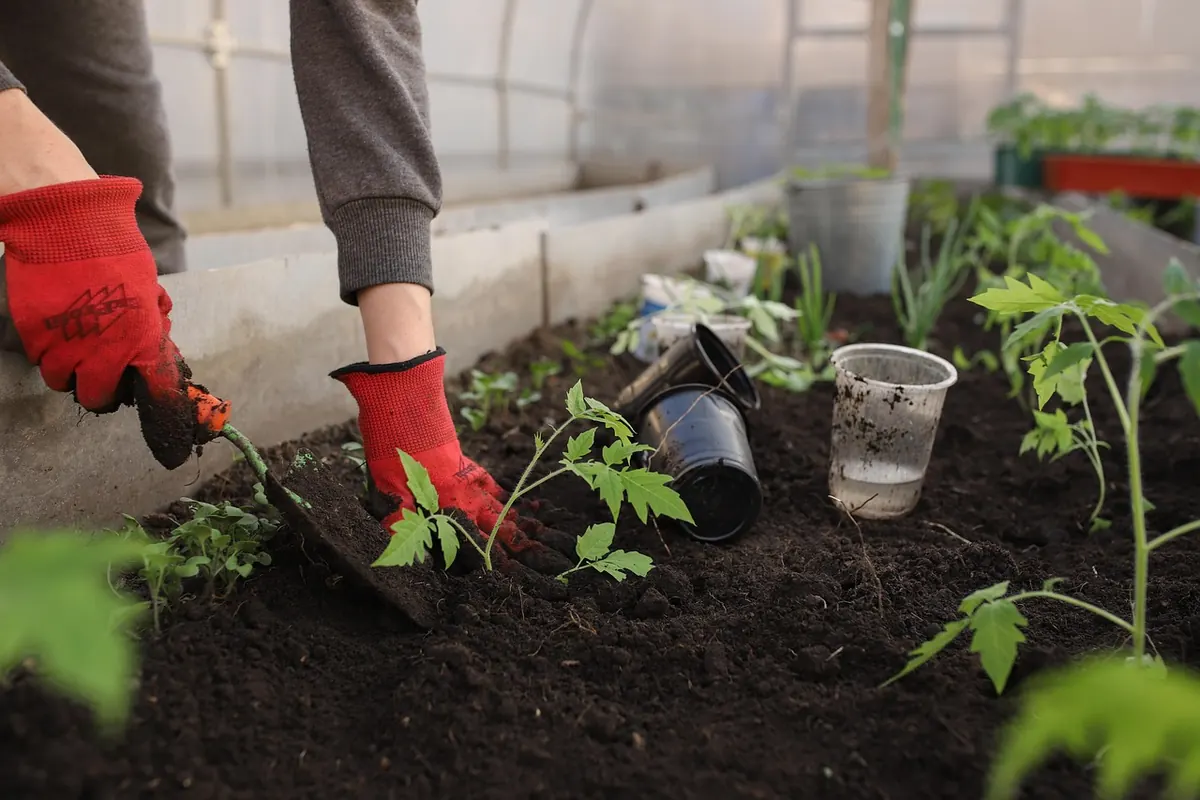
Autumn onion sets go in shallow. Push each set into firm soil so the tip just sits at the surface, with no more than 2 cm (under an inch) of soil over it. Bury them and they sulk; bury them deep and they rot. Space sets 10 cm (4 in) apart for bulb onions, closer if you plan to pull some as spring scallions, and keep rows 25 cm (10 in) apart.
Transplants from an August sowing work well too, and they rarely bolt as badly as sets. Set them 3 to 4 cm (1.5 in) deep with roots straight down, firm the soil around each one, and keep them damp for a fortnight. Both sets and transplants benefit from a handful of bonemeal or a low-nitrogen fertilizer worked into the row beforehand — nitrogen now just makes soft leaves.
Mulch: Wait, Then Cover
The urge to tuck the bed up immediately is strong and worth resisting. A thick mulch laid over warm autumn soil keeps the ground too warm, encourages soft growth, and gives slugs and mice somewhere comfortable to spend the winter. Wait until the soil has cooled, ideally after two or three hard frosts or when the ground is just beginning to freeze. Then spread 10 to 15 cm (4–6 in) of loose material over the rows.
- Chopped straw or spoiled hay — the classic, and easy to pull back in spring.
- Shredded autumn leaves — run the mower over them first, or they mat into a soggy blanket.
- Pine needles, where you have them — light, acidic, slow to break down.
- Two layers of plain cardboard weighed with compost, for a bed you will not touch until March.
Avoid whole wet leaves, grass clippings and anything that compacts. The mulch's job is to stop the soil freezing and thawing, which heaves small plants out of the ground; it is not there to keep them cosy. In mild, wet climates where the ground never freezes, 5 cm is plenty, and drainage matters more than insulation.
Winter Checks and the Spring Handover
Walk the beds once a month. Push back the mulch and check that cloves and sets are still where you left them — frost heave lifts them, and a firm press with the heel puts them back. Replace anything that has rotted. A gap costs nothing in December and a lot in May.
In early spring, pull the mulch aside so the soil warms and light reaches the new leaves. Feed with a balanced fertilizer as growth starts, water in a dry April, and keep the rows weeded; alliums are poor competitors. If an onion throws a flower bud, snap it off and pull that plant first — bolted onions will not store. Harvest garlic when three or four green leaves remain and the rest have gone brown, usually in early to midsummer.
A Last Warm After
Photo: Rachael Holzman / Pexels
You Might Also Like
A practical checklist for drying, labelling, moisture-testing and storing homegrown seeds, so what you save this autumn still germinates strongly next spring.
Soil temperature, not the calendar, decides when a seed wakes up. How to measure it, and which crops want cool ground or warm.