How to Test Old Seeds for Germination Before Planting Season
There is a particular kind of hope in a packet of seeds found at the back of a drawer. The label says “tomato” or “calendula,” the date is three or four years old, and you cannot quite bring yourself to throw it away. Before you clear a row or fill a seed tray, give those seeds a fair chance to answer a simple question: are you still alive? A paper-towel germination test takes very little space, costs almost nothing, and gives you useful information before planting season gets busy.
Why Old Seeds Deserve a Test
Seeds are living things, even when they look dry and quiet. Their ability to germinate declines with age, and how they were stored matters as much as how long they have sat in a cupboard. A packet kept in a cool, dark, dry box usually behaves better than one that spent two summers in a hot shed. Some kinds of seed stay viable for years; others, such as parsnip and onion, are famously short-lived. Beans, tomatoes, and many flowers often hold on longer, but “often” is not a promise.
A germination test will not tell you everything about vigor, and it cannot rescue dead seed. What it can do is give you a rough percentage: out of ten or twenty seeds, how many produce a healthy root and shoot. That number helps you decide whether to sow as usual, sow more thickly, or leave the packet out of the garden plan. It is a small experiment with a practical payoff.
Gather a Simple, Clean Setup
You do not need special equipment. A kitchen counter and a little patience are enough. Cleanliness matters, because damp paper and warmth can also encourage mould. Wash your hands, use a clean plate or container, and start with fresh paper towel.
- Seeds from the packet you want to test
- Plain white paper towel, not the printed or scented kind
- Water for dampening, ideally at room temperature
- A small plate, tray, or resealable bag
- A marker and a notebook or phone note for recording results
- A reasonably warm spot out of direct sun
A plastic bag is handy because it holds moisture, but an open plate covered with another plate works too. The aim is steady moisture without standing water.
Take a Representative Sample
Do not test the whole packet. Count out a sample of ten seeds for most home gardens. If the seed is especially precious or you want a little more confidence, use twenty. Ten seeds give you a result in steps of 10 percent; twenty seeds give you finer steps. Either is enough for a garden decision.
Take the seeds from different parts of the packet rather than picking out the plumpest ones on top. You want a sample that represents the packet, not a beauty contest. Keep each variety separate and label it clearly. If you are testing several packets, set them up one at a time so the labels and counts do not get mixed up.
Set Up the Paper-Towel Test
The method is simple, but a few details make the difference between a useful result and a soggy mess.
- Wet the paper towel and wring it out gently. It should be damp, not dripping. If you can squeeze out a stream of water, it is too wet.
- Lay the towel flat and place the seeds in a row, spaced well apart. Leave enough room that roots and shoots do not tangle.
- Fold the towel over the seeds, or roll it loosely. Do not press hard or crush the seeds.
- Slide the folded towel into a labelled bag or place it on a plate and cover it. Write the variety and the date on the label.
- Put it in a warm spot, roughly room temperature to slightly warm. Most common vegetable and flower seeds germinate well in that range; peppers and eggplants often appreciate a little more warmth, while lettuce prefers things cooler.
- Check every day. Mist or re-dampen the towel if it starts to dry, and remove any seeds that turn soft and mouldy.
Do not seal a soaking-wet towel into a bag and forget it. That is how seeds rot. Aim for a humid, airy setup and inspect it daily.
Check, Count, and Record
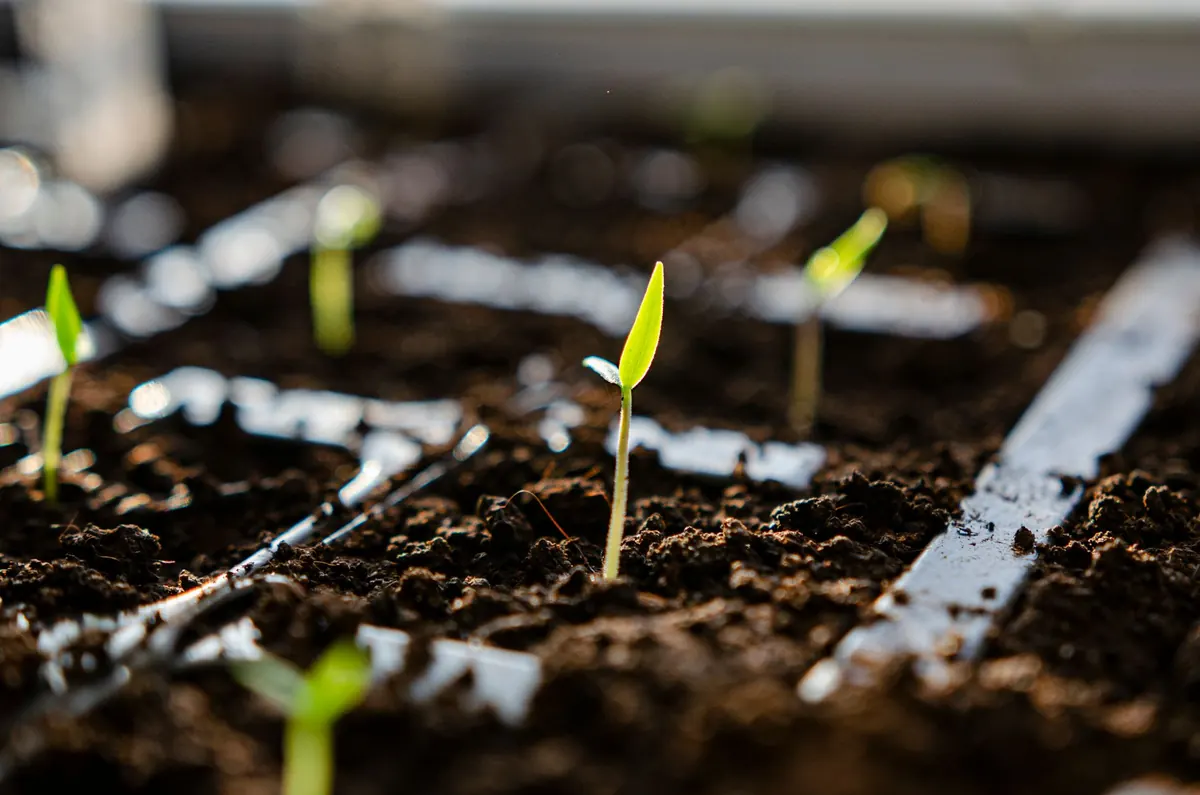
Most seeds will show signs of life within five to fourteen days, though some are slower. A seed has germinated when a firm white root emerges. A tiny green shoot is even better, but the root is the first clear sign. Count each seed that produces a healthy root, and make a note of the date. If a seed swells and then turns mushy, it has failed. If it does nothing at all, leave it a few more days before calling it.
Keep a simple record: variety, date started, number tested, number germinated, and any oddities. “Ten tested, seven germinated” is enough. Photographs help if you are testing several packets over a few weeks. The written record is more reliable than memory, especially when spring tasks start piling up.
Read the Results Without Overthinking Them
Divide the number that germinated by the number you tested, then multiply by one hundred. Seven out of ten is 70 percent. Fifteen out of twenty is 75 percent. With small samples, treat the number as a rough guide rather than a precise laboratory figure. One extra seed either way can shift a ten-seed test by ten points.
As a general guide, a result above 80 percent is strong: sow as you normally would. Between 50 and 80 percent is workable: sow a little more thickly, or start the seed indoors where you can control conditions. Below 50 percent, the packet is telling you something. You can still sow it, but use it for a low-risk patch, sow much more thickly, or choose fresh seed for the main crop. A result of zero after a fair waiting period means the packet is unlikely to earn its space.
Also look at vigor, not just the count. Strong, quick roots and clean shoots suggest seeds with energy left. Weak, curled roots and slow starters may still grow, but they can struggle after transplanting. And remember that some seeds have hard coats or natural dormancy; one failed test is not always the final word, though for old vegetable packets it usually is a practical one.
Decide What to Sow
Use the test to adjust your plans rather than abandon them. If your old tomato seed germinates at 60 percent, sow roughly one and a half to two times the number of seeds you would normally use, then thin or pot up the strongest seedlings. If direct sowing, mark the row and check it more often than usual. For a packet with 40 percent germination, give the best seeds the best conditions: fresh seed-starting mix, steady warmth, and careful watering. Keep the weaker packet for a casual flower patch or a cover crop experiment, not for the crop you are counting on.
You can pot up the seedlings from a successful test, but they have been handled and may be more fragile than seeds sown normally. It is usually simpler to discard the test and sow fresh from the packet with your new knowledge in hand.
A Small Test Before the Season
Set up one or two paper-towel tests this week, label them, and check them with your morning coffee. In a handful of days you will know which packets deserve garden space and which can be let go. That is a good trade: a little damp paper, a little patience, and a planting plan based on what the seeds can actually do.
Photo: Piotrek Wilk / Pexels
You Might Also Like
A practical checklist for drying, labelling, moisture-testing and storing homegrown seeds, so what you save this autumn still germinates strongly next spring.
Soil temperature, not the calendar, decides when a seed wakes up. How to measure it, and which crops want cool ground or warm.